
Importance of Cow
Why the cow has been called mother: in food, farming and health.
Cattle were among the first species domesticated by humans, after dogs and horses. Some civilisations, including the Aryans and Indians, depended so much on cattle over time that they began to worship them as mother and goddess.
She was called mother because of her ability to give milk suitable for human consumption. Milk and its products became a base for almost all Indian food and sweets, as they still are.
Cattle dung as manure. Before industrialisation, the main source of manure for agriculture was cattle dung, decomposed in specific ways and used in the fields. The modern concept of organic farming promotes the same practice once followed across the Indian subcontinent.
Cow urine in Ayurveda and farming. Ayurveda describes many uses of cow urine. Fermented with herbs such as neem and mahua, it makes an effective natural pesticide for agriculture.
Indian agriculture is varied: grains, pulses, vegetables, fruits, flowers, cotton and silk. About 70% of our population has embraced agriculture as a profession, and cattle are an integral part of it. We use oxen to plough, to move harvested crops and for irrigation; cow manure as fertiliser and cow urine as insecticide.
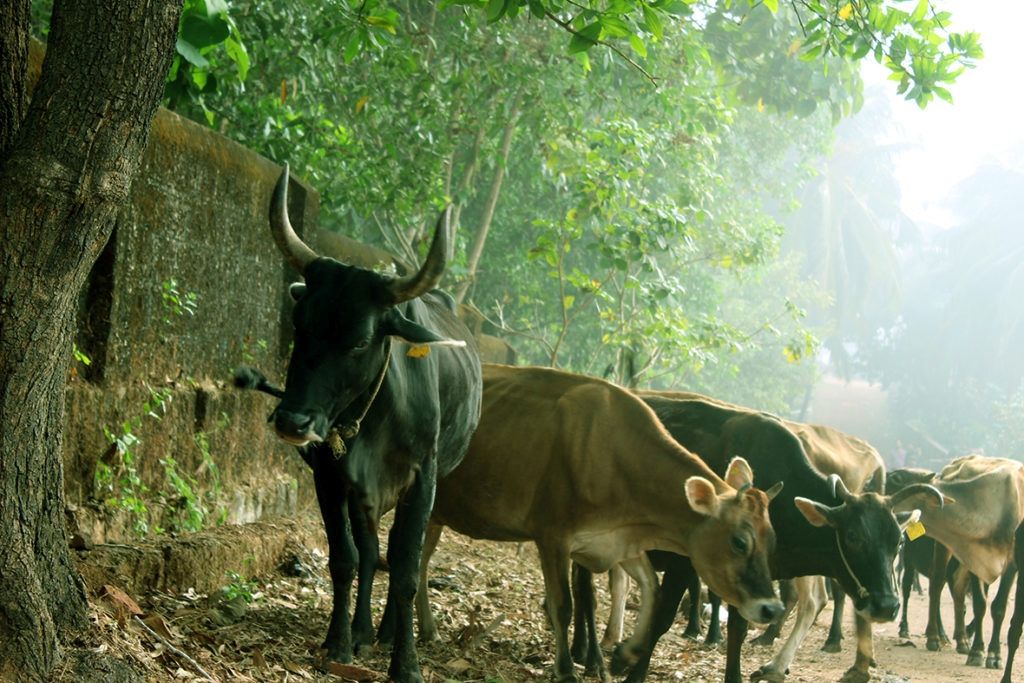
The unique role of the cow in agriculture
- In a country of small holdings and small-scale farming, there is no better alternative to employing cattle in farming.
- While ploughing, oxen stride with a gentle gait, not harming the surface of the earth as tractors do. Even as they plough, they fertilise the land.
- Cattle manure, green-leaf manure, earthworms and slurry bond with nature and make the land fertile, without creating chemical waste.
- 99% of the insects in nature are beneficial. Insecticides prepared from cow urine or well-fermented buttermilk do not harm these helpful insects.
- The dung of one cow is adequate to fertilise 5 acres of land, and its urine can protect 10 acres of crop from insects. Oxen do not pollute the atmosphere.
- Fertilisers made from cow dung and cow urine improve the quality and yield of crops, and dung-based manure helps the soil hold water far better than chemical fertilisers.
Help us care for 300 cows
Our Gou Seva needs about ₹6 lakh every month. Every gift is eligible for 80G tax deduction.